
Leave Your Message
Explore our leading industrial solutions engineered for high output, maximum durability, and superior hydraulic compression. These systems represent the cutting edge of interlocking brick fabrication.


The global construction industry is undergoing a paradigm shift toward sustainable, cost-effective, and rapid building technologies. At the center of this revolution is the brick manufacturing machine for interlocking brick production. Unlike traditional clay bricks that require energy-intensive kiln firing and mortar-based masonry, interlocking bricks are engineered to lock into one another using precise male and female keys. This system radically reduces the reliance on cement mortar, minimizes labor costs, and speeds up the construction cycle by up to 50%.
Today, municipal authorities, private developers, and industrial conglomerates are prioritizing interlocking bricks for various infrastructure projects. The demand is heavily driven by the need for affordable housing in developing economies, the expansion of commercial paving, and ecological conservation initiatives. Modern interlocking brick manufacturing machines process a variety of raw materials, including fly ash, industrial slag, quarry dust, sand, and soil-cement mixtures. This versatility makes them highly sought-after in circular economy models, turning industrial waste into high-strength load-bearing building blocks.
The versatility of interlocking brick machines extends far beyond basic residential partition walls. In modern civil engineering, these machines are deployed in distinct, high-stress environments:
Interlocking blocks are engineered to distribute lateral shear forces more evenly than traditional masonry. During seismic events, the dry-stacked nature of interlocking walls allows for slight movement and energy dissipation without catastrophic structural collapse. This makes them ideal for earthquake-prone rebuilding zones, such as the restoration projects in Tianshui City, Gansu Province, where safety and speed of deployment are critical.
Permeable interlocking concrete pavers are essential for sponge city initiatives. Manufactured under high hydraulic pressure, these pavers allow rainwater to infiltrate the subsoil, reducing urban runoff and recharging local aquifers. They are widely utilized in public plazas, industrial parking lots, and municipal sidewalks.
For agricultural warehouses, boundary walls, and industrial yards, interlocking blocks offer an unmatched cost-to-durability ratio. By utilizing local soil and minimal cement stabilization, developers can establish on-site production factories, eliminating material transportation logistics.
Modern interlocking brick machines utilize advanced vibration-table technology combined with dual-cylinder hydraulic compression. This dual-action compaction ensures that even complex geometric molds—with internal channels for reinforcing bars and electrical conduits—reach uniform density from top to bottom.
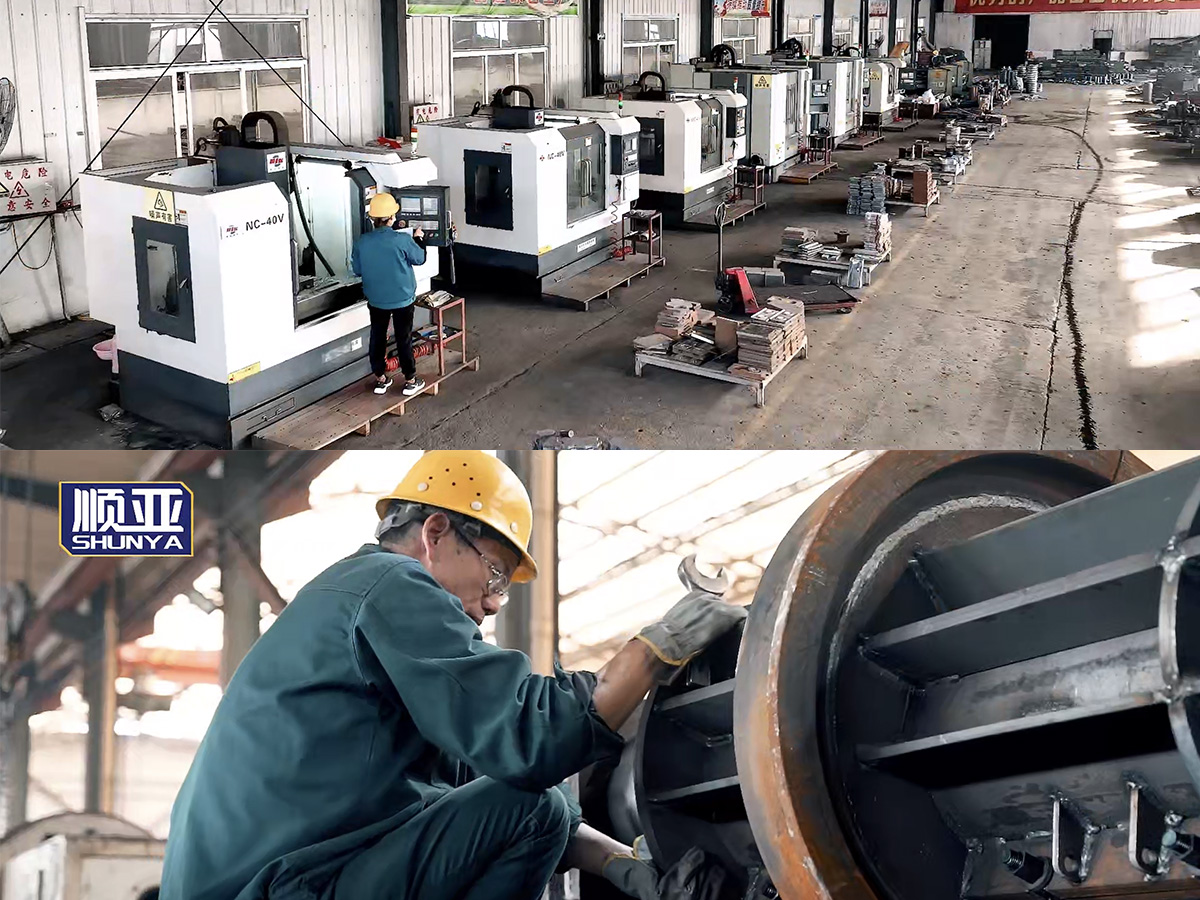
Shandong Shunya Machinery Co., Ltd. has been specializing in the design, manufacture, block making machine, mixer, and sale of moulds for concrete poles, concrete moulds for pipe piles. With advanced equipments, excellent professional technology and 18-year of practical experience, the R&D department in block making machine market development has always been at the forefront of the market. In the developing of Block Making Machines, Shunya is paying close attention to advanced technology at home and abroad, developing different products which are suitable to different investment needs from customers.
With the conception of high quality and high efficiency, Shunya keeps the ideal of making its customers to get maximum benefits, of going forward hand in hand to striving for developments together.
Our company puts the new technology, new product R&D in the first place. 50 patents have been applied. The application of these new technologies ensures rationality, stability, and reliability of machines, which have been praised widely by customers. Currently, we have established subcompanies in Tanzania, Nigeria, Algeria, Cameroon, Kenya, Ethiopia, DR Congo, and Cote d'Ivoire. We also have 19 domestic agencies in China, and our machines are exported to more than 100 countries and regions.
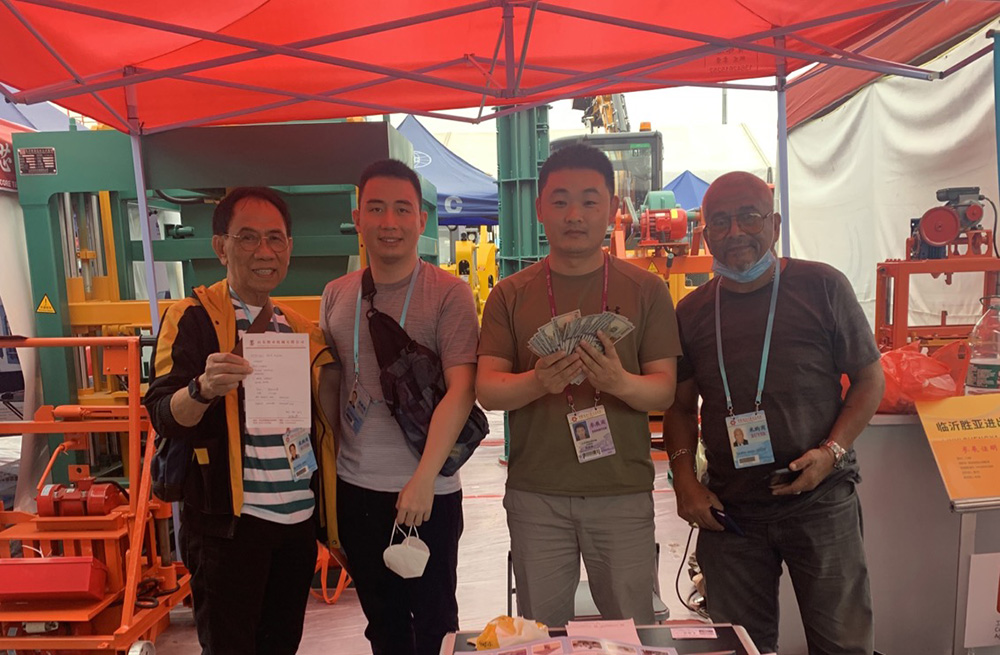
Equipments were purchased by the Ministry of Commerce and donated to the Government of the Democratic Republic of the Congo as machine in aid (Lot Number: [2004]322), and purchased by Government Procurement for rebuilding the earthquake-stricken area in Tianshui City, Gansu Province. Our equipment is also trusted by major engineering groups including China Railway 20 Bureau Group Company Angolan Projects department, China Petroleum Seventh Construction Company Nigerian project department, Guangxi Hydroelectric Bureau Angolan project department, and China CTDI.
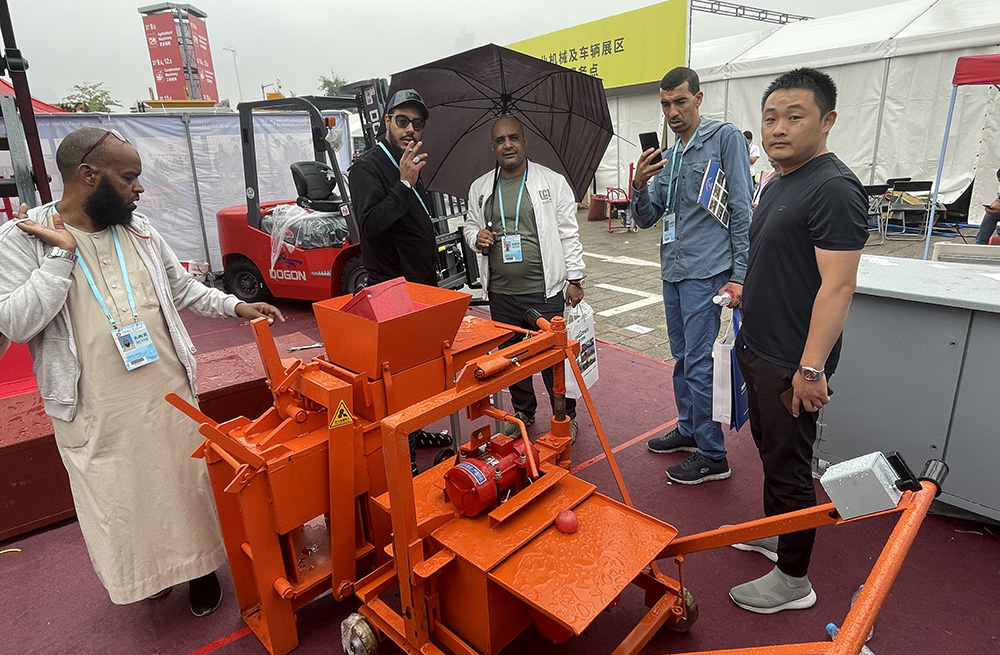
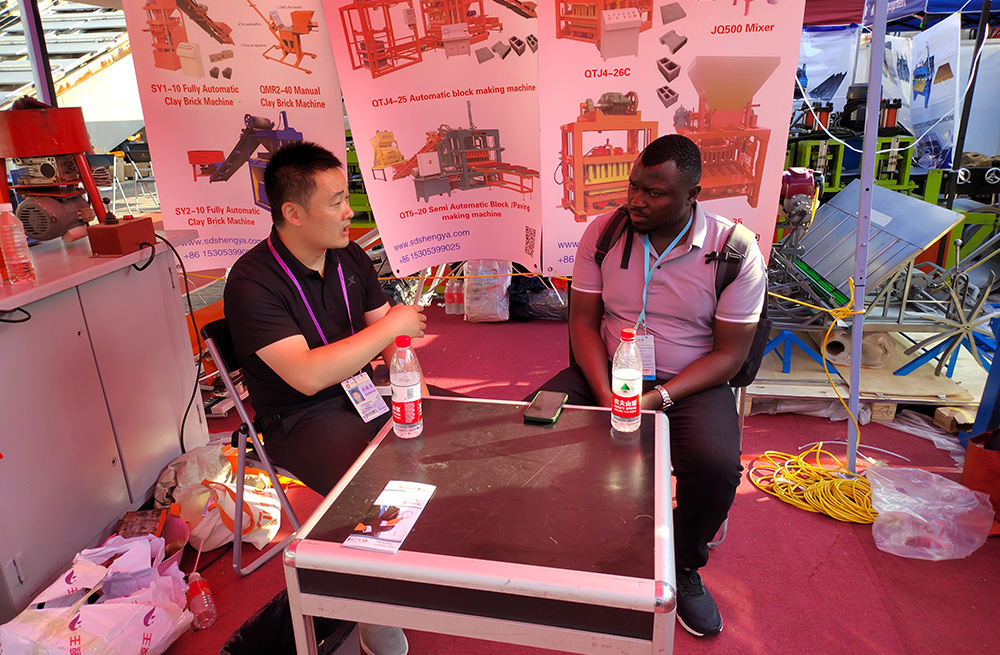
Shandong Shunya Machinery actively participates in international construction machinery expos, demonstrating our technology to global buyers and collaborating on infrastructure development projects across continents.


As the construction sector aligns with global net-zero carbon targets, the technology powering brick manufacturing machines for interlocking brick production is evolving rapidly. The integration of digital twins, IoT diagnostics, and automation is transforming standard production plants into smart factories. Below are the key trends defining the future of this industry:
Modern production lines utilize programmable logic controllers (PLC) from brands like Siemens or Mitsubishi. These systems monitor hydraulic oil temperature, pressure levels, and cycle times in real-time. Automated diagnostics reduce downtime by predicting mechanical wear and optimizing the dosing of raw aggregates, ensuring absolute consistency in block dimensions.
Research in material science has paved the way for cement-free interlocking blocks. By using alkali-activated binders (geopolymers) combined with industrial byproducts like fly ash and slag, brick manufacturers can produce blocks that cure at ambient temperatures while locking away carbon dioxide. The high compaction force of hydraulic machines is critical to achieving structural integrity with these alternative binders.
To maximize return on investment, operators require machines that can switch from producing interlocking wall bricks to road pavers or hollow blocks in under an hour. Advanced CNC-machined carbonized moulds ensure high precision and wear resistance, allowing factories to cater to diverse municipal and residential demands with a single machine base.
Engineering Corporation Libyan project department, Sinohydro Bureau 13 company Zambia project department, and Australian Pineneedle Group for projects in East Timor have all purchased Shunya Block Making machines and set up nice, long-term relationships with us. The company insists on the people-oriented, quality-first focus on the development of the international market. All of these have certified the development course of building an enterprise through arduous effort, striving to make the enterprise prosperous, daring to win the first in making the first class by the Shunya people.
Discover our complete catalog of brick manufacturing machinery, concrete pole equipment, and specialized hydraulic interlocking systems designed for global industrial deployment.


